 Reviews

 Proudly American

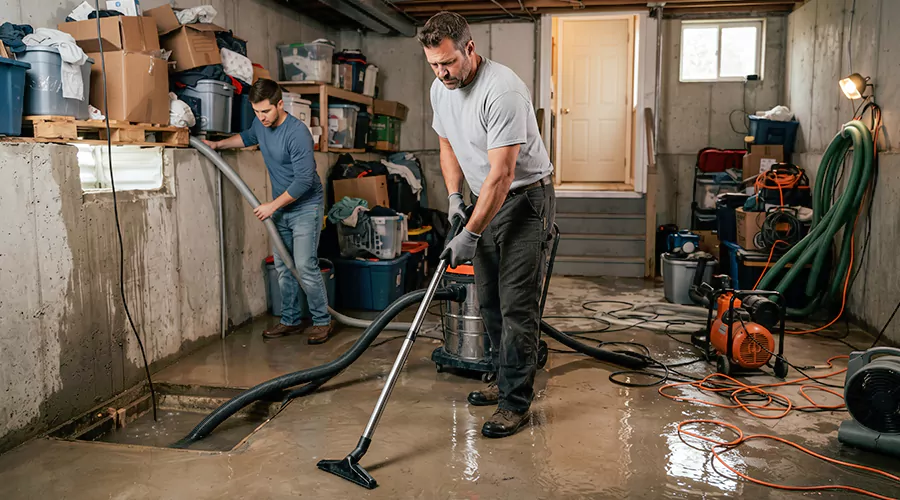
Remove water from a basement as soon as it is safe because wet materials should begin drying within 24 to 48 hours whenever possible. Start by stopping the source of the water and checking for electrical hazards. Remove standing water next. Then dry the basement with controlled airflow and dehumidification.
Even a shallow layer of water can spread into carpet or drywall within hours. The correct cleanup method depends on where the water came from and how much of the basement became wet.
What Should You Do Before Removing Basement Water?
Safety should come before water removal because standing water can come into contact with outlets or electrical equipment. Never walk through water to reach an electrical panel. If you cannot safely disconnect power from a dry location, avoid entering the flooded area.
Before starting basement water cleanup:
- Identify where the water is coming from.
- Stop an active plumbing leak when safe.
- Keep children and pets away.
- Check for damaged ceilings or walls.
- Turn off electricity from a dry location if needed.
- Determine whether sewage is involved.
- Photograph the affected area before cleanup.
Water from a broken supply pipe is very different from sewage or outdoor floodwater. Contamination changes which materials can be cleaned and which may need removal.
How Do You Remove Standing Water From a Basement?
Standing water can often be removed with a submersible pump or wet-dry vacuum once electrical conditions are safe. Pumps work well for deeper water. A wet-dry vacuum is usually better for shallow water left across the basement floor.
Use this process:
- Pump out deeper standing water.
- Vacuum smaller remaining puddles.
- Work toward low areas of the basement.
- Empty the equipment as directed.
- Continue until exposed floors have no standing water.
- Begin drying wet materials immediately.
Never use a normal household vacuum to remove water.
Basement flood water removal does not end when the visible water disappears. Concrete and finished wall materials can still contain moisture.
What Materials Should You Remove After Basement Flooding?
Materials that cannot dry quickly may need to be removed so moisture does not remain trapped inside the basement. Porous materials absorb water more readily than hard surfaces and can become difficult to dry after heavy saturation.
Check these materials carefully:
- Carpet padding
- Saturated insulation
- Wet cardboard
- Damaged drywall
- Upholstered furniture
- Fiberboard products
- Paper materials
- Swollen laminate flooring
Carpet exposed to clean water may sometimes be saved when extraction begins quickly. Padding can be harder to dry because it holds water beneath the carpet.
Sewage-contaminated materials require greater caution. Ordinary basement flood clean up methods should not be used when wastewater has soaked porous surfaces.
How Do You Dry a Basement After Water Removal?
A wet basement needs both airflow and moisture removal. Fans help water evaporate from surfaces while a dehumidifier removes that moisture from the surrounding air. Drying should continue until flooring or wall materials no longer contain elevated moisture.
Use these steps:
- Remove materials that block airflow.
- Run dehumidifiers according to their instructions.
- Move air across exposed wet surfaces.
- Open interior doors when appropriate.
- Monitor humidity with a hygrometer.
- Check behind baseboards for moisture.
- Continue drying until readings stabilize.
Opening windows is not always helpful. Humid outdoor air can actually slow basement drying.
Basement water mitigation works best when liquid water is extracted first and remaining moisture is controlled afterward.
How Long Does a Wet Basement Take to Dry?
A lightly affected basement may dry in two or three days after proper water extraction. Moderate flooding often requires three to seven days. Dense materials can take longer because moisture can remain inside them after exposed surfaces appear dry.
| Basement Condition | Approximate Drying Time |
|---|---|
| Small clean-water area | 1 to 3 days |
| Moderate floor flooding | 2 to 4 days |
| Wet flooring or drywall | 3 to 7 days |
| Saturated structural materials | 5 to 7+ days |
| Major basement flooding | 1 week or longer |
Drying time should not be judged by the floor surface alone.
A basement can feel dry while moisture remains inside drywall or beneath finished flooring.
What Warning Signs Mean Water Is Still Hidden?
Hidden moisture often causes physical changes after standing water is gone. Swollen trim can indicate water behind finished surfaces. Persistent odor can also point to materials that have not dried completely.
Watch for these warning signs:
- Drywall feels soft near the floor.
- Baseboards begin swelling.
- Paint starts bubbling.
- Flooring edges lift.
- Carpet padding remains damp.
- A musty smell develops.
- Water stains continue spreading.
- Indoor humidity stays high.
- Wood framing feels damp.
- Visible mold begins to appear.
Basement water remediation can become more involved when these symptoms continue after several days of drying.
The area that looks wet is not always the full affected area. Water can travel beneath flooring before becoming visible somewhere else.
What Can You Check Yourself?
A moisture comparison can help determine whether the basement is drying. Use a moisture meter made for the material you are testing. Compare the affected area with a similar material that was not exposed to water.
Follow these steps:
- Choose a dry reference area.
- Record its moisture level.
- Test the wet area.
- Mark the test location.
- Repeat the reading the next day.
- Look for steady improvement.
A hygrometer can also track indoor humidity during drying.
Keeping basement humidity under control is useful even after the immediate flood has been cleaned up. Persistent high humidity can slow the drying of wood or drywall.
When Should You Call a Professional?
Professional help is appropriate when basement water is contaminated or covers a large finished area. Electrical exposure also makes DIY cleanup unsafe. Moisture inside walls may require stronger extraction equipment and more detailed moisture testing.
Consider professional help when:
- Sewage entered the basement.
- Outdoor floodwater entered the home.
- Electrical equipment became wet.
- Several finished areas are affected.
- Insulation is saturated.
- Drywall remains wet.
- Water keeps returning.
- Mold is visible.
- The source cannot be identified.
- Drying has stopped improving.
Large basement water removal projects may also require commercial dehumidification to dry building materials within a reasonable period.
How Can You Prevent Water From Returning?
Prevention should address the actual source of the original basement flooding. A plumbing leak requires a different fix than groundwater seepage. Regular maintenance can also reveal problems before they create another major cleanup.
Use this routine:
- Test the sump pump every few months.
- Check backup power before storm season.
- Keep gutters clear.
- Direct downspouts away from the foundation.
- Inspect basement plumbing monthly.
- Place water alarms near equipment.
- Check foundation walls after heavy rain.
- Keep stored belongings above floor level.
Recurring water should not be treated as a drying problem alone. The cause of the water entry also needs correction.
Conclusion
Removing water from a basement starts with safety and fast extraction. Standing water should be pumped or vacuumed before the basement is dried with airflow and dehumidification. Hidden moisture may remain after the floor looks dry, so check walls and flooring carefully. If contaminated water or electrical hazards are involved, professional help is appropriate. This week, test your sump pump and inspect the basement for signs of recurring moisture.
Frequently Asked Questions
Can I use a shop vacuum to remove basement water?
Yes. A wet-dry vacuum can remove shallow clean water when electrical conditions are safe. Never use a standard household vacuum.
Should I run fans after a basement flood?
Yes. Fans can speed evaporation after standing water is removed. A dehumidifier should also be used when humidity remains high.
How quickly should basement water be removed?
Begin as soon as it is safe. Faster extraction reduces the amount of water that can soak into walls or flooring.
Can wet basement carpet be saved?
Sometimes. Clean-water carpet may be saved when extraction and drying begin quickly. Contaminated carpet is more likely to require removal.
Why does my basement smell after the water is gone?
Moisture may remain beneath flooring or inside walls. A persistent musty smell can indicate hidden damp material.
Should I replace drywall after basement flooding?
Not always. Drywall may be saved after limited clean-water exposure if it dries quickly and remains firm. Saturated or contaminated drywall often requires removal.